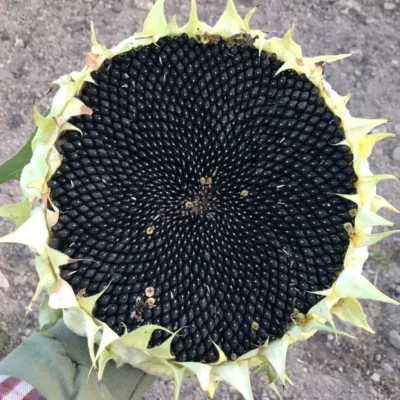
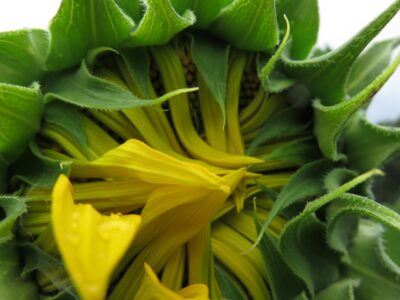
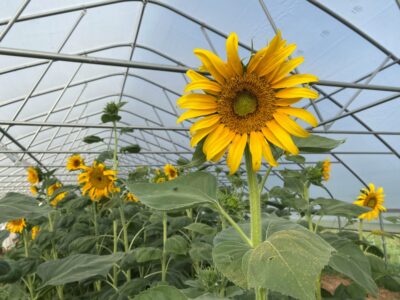
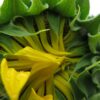
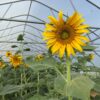
Sımişka is a breathtaking sunflower stewarded by the Molokans of Northeast Turkey. Although we have been growing this seed for about a decade, we grew our current seed stock from the seed which came from my cousin Ayşegül Küçükgöçmen in 2019, who collected a sample from Sımişka’s keepers when she visited Kars.
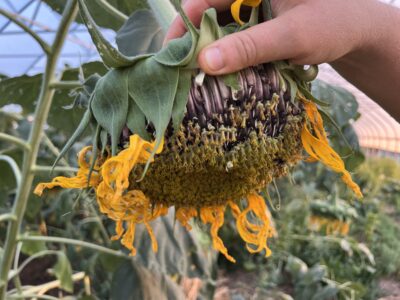
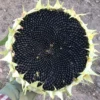
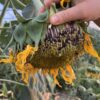
Sımişka sunflower grows large flower heads filled with very long, pitch black and flavorful seeds that are not only excellent for fresh eating but also great for making oil.
Every now and then we see the “ornamental” side of this amazing sunflower when multiple heads on one plant also appear, and we keep them in our seed mix so don’t be surprised to find those plants with smaller flowers and seeds.
Our current Sımişka sunflower seed stock was grown by Lindsay Klaunig of Trouvaille Farm in Ohio. Photos by Lindsay Klaunig and Mehmet Öztan.
Packet has min. 20 seeds
Commercially introduced by us!
Phonetically pronounced:
- Helianthus annuus
- Needs full sun
- Planting depth: 1/2″
- Sprouts in 7-10 days
- Ideal growing temperature: 75-95F
- Plant spacing: 18-24″
- Frost hardy: No
- Growth habit: Upright growth with one main, large flower and many small flowers that grow away from the stem
- Growing tips: Directly sow your sunflower seeds in well-drained, compost-rich after last frost in spring and once the soil has warmed to 70F. Keep soil consistently moist until seeds germinate. Once seedlings come through, thin them to maintain 18-24″ spacing along the rows that are 30″ apart from each other. In windy areas, sunflower plants, especially the tall ones, may need staking.
Matthew (verified owner) –
5 out of 5 because my wife is ecstatic about eating some actually large seeds.
See photo. Seeds are large but variable from plant to plant. Seeds were easy to pick from the head. Squirrels kept eating them… this variety is not quite as tall as a mammoth, but the stems will have the same girth and strength, leaves were colossal in size. Would like to see such size photos be standard on this website.
I’m not fond when they sprout additional heads, but I can weed those out. The secondary heads also lack the strength and were often times shearing off the sides.
Last, they may not be heat tolerant if you’re looking for yield… they would pollinate, but no seeds inside the shell. You could see the pattern for when they were pollinated the hot and moderate heat days. Additionally, the shell is monumental but the seed within does not extend the full length. Why? The heat? Was the size selected for ease of processing? That would be interesting information to have.
Harder to germinate than other varieties, but there are… methods.
Ahmet (verified owner) –
Did poorly
Deborah (verified owner) –
Did not germinate at all.
Anonymous (verified owner) –
Michael Robinson (verified owner) –
I planted 4 of these beauties. Large flower attracted lots of bees, other insects, and finches.